

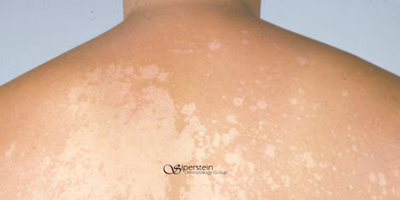
Have you ever noticed white spots on your skin after spending time in the sun? While they can be concerning, these spots are often harmless. Two of the most common causes are tinea versicolor and idiopathic guttate hypomelanosis (IGH).
Tinea Versicolor
Tinea versicolor is a common fungal skin condition caused by an overgrowth of Malassezia, a yeast that naturally lives on the skin. Heat, humidity, and sweating make it more common during the summer months.
It often appears as:
• White, tan, or light brown patches
• Fine scaling
• Spots on the chest, back, shoulders, or upper arms
The affected skin doesn’t tan normally, so the spots become much more noticeable after sun exposure.
Treatment typically includes prescription antifungal creams, medicated washes, or oral medications in more widespread cases. Even after the fungus is treated, it may take several weeks or months for normal skin color to return.
Idiopathic Guttate Hypomelanosis (IGH)
IGH is a harmless condition caused by years of sun exposure and natural aging—not a fungal infection.
These spots are typically:
• Small, smooth white spots
• Found on the forearms, shins, and legs
• More common in adults over 40
Unlike tinea versicolor, IGH does not cause scaling and isn’t contagious. Treatment is usually unnecessary, although cosmetic options may be available for patients bothered by the appearance.
How Can You Tell the Difference?
Tinea Versicolor
• Caused by yeast
• Fine scaling
• Usually affects the chest, back, shoulders, and upper arms
• Treatable with antifungal medication
Idiopathic Guttate Hypomelanosis (IGH)
• Caused by chronic sun damage
• Smooth skin without scale
• Usually affects the arms and legs
• Usually no treatment is needed
When Should You See a Dermatology Provider?
Not every white spot is caused by tinea versicolor or IGH. Conditions such as vitiligo or post-inflammatory pigment changes can look similar.
If you notice new or spreading white spots, persistent scaling, itching, or other changes in your skin, schedule an evaluation with a dermatology provider. An accurate diagnosis is the first step toward the right treatment.
Protect Your Skin
The best way to help prevent many sun-related skin changes is by wearing a broad-spectrum sunscreen with SPF 30 or higher every day, along with protective clothing and seeking shade when possible.
If you’ve noticed white spots after a tan, the team at Siperstein Dermatology Group can
