

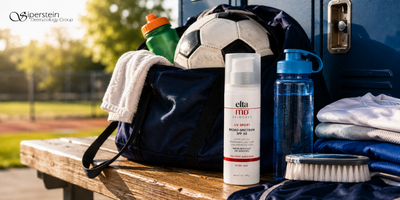
Back to school season also means returning to outdoor practices, sweaty uniforms, shared equipment, and locker rooms. These simple habits can help student athletes prevent sunburns, breakouts, irritation, and common skin infections.
Choose a Sport-Friendly Sunscreen
For outdoor practices and games, choose a sunscreen that is:
- Broad-spectrum
- SPF 30 or higher
- Water-resistant for 40 or 80 minutes
Mineral sunscreens containing zinc oxide or titanium dioxide are often a good choice for sensitive skin. Chemical and hybrid sunscreens may feel lighter and blend more easily. For acne-prone skin, look for “oil-free” or “non-comedogenic” on the label.
Apply sunscreen before going outdoors and reapply every two hours (or sooner after heavy sweating, swimming, or toweling off). Sunscreen sticks are convenient for the face, while sprays can be helpful for the body as long as they are applied generously and rubbed in.
Prevent Sports-Related Acne
Sweat, friction, and tight equipment can contribute to acne mechanica, which commonly develops beneath helmets, chin straps, shoulder pads, sports bras, and compression clothing.
To prevent breakouts:
- Begin practice with clean skin.
- Gently pat away sweat instead of rubbing.
- Change out of sweaty clothing promptly.
- Shower as soon as possible after practice.
- Clean helmets, pads, and other frequently used equipment.
- Avoid sharing towels or protective gear.
If showering immediately is not possible, change into dry clothing and consider using a salicylic acid pad on acne-prone areas. A hypochlorous acid spray may also help freshen sweaty, irritated skin until you can shower, although it does not replace proper cleansing.
For persistent acne, a dermatologist may recommend treatments such as benzoyl peroxide, adapalene, or prescription clindamycin pads.
Watch for Locker Room Infections
Athlete’s foot, ringworm, warts, molluscum, and bacterial infections can spread through shared surfaces and equipment.
Wear shower shoes in locker rooms, keep feet clean and dry, wash uniforms after each use, cover cuts, and avoid sharing towels, razors, or personal equipment. Seek medical care for a rash that is spreading, painful, draining, crusting, or not improving.
Keep the Routine Simple
Student skincare does not need to be complicated. A gentle cleanser, non-comedogenic moisturizer, daily SPF 30 or higher, and any dermatologist-recommended acne treatment are often all that is needed.
If your child or teen is struggling with persistent acne, recurrent rashes, excessive sweating, or a possible skin infection, the providers at Siperstein Dermatology Group can create a treatment plan that fits their skin and their sport.
