

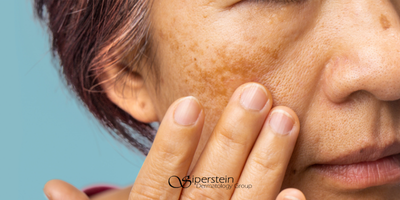
Melasma is a common skin condition that causes patchy brown or gray-brown discoloration, most often on the cheeks, forehead, upper lip, and jawline. While harmless, it can be frustrating to treat and often requires a long-term approach.
What causes melasma?
Melasma is caused by overactive pigment-producing cells. Common triggers include:
- Sun exposure (the biggest factor)
- Hormonal changes (pregnancy, birth control, hormone therapy)
- Heat and visible light
- Genetics
It typically appears symmetrically and can worsen over time without proper management.
Why is it so persistent?
Melasma often involves deeper layers of the skin, which makes it prone to recurrence. It’s best thought of as a condition we manage over time rather than a condition we can cure.
The most important step: Sun Protection
Daily sun protection is essential:
- Broad-spectrum SPF 30+ every day
- Tinted sunscreen (iron oxides) to block visible light
- Regular reapplication and sun avoidance when possible
Without this, other treatments are far less effective.
Treatment options
We typically use a combination approach:
Topicals:
- Hydroquinone (used in cycles)
- Tretinoin
- Azelaic acid
- Tranexamic acid
- Combination creams
In-office / systemic options (when needed):
- Oral tranexamic acid (select patients)
- Chemical peels
- Carefully selected laser treatments
Not all lasers are appropriate—aggressive treatments can worsen melasma, so individualized care is key.
What to expect
- Results take time (often 8–12 weeks minimum)
- Maintenance is usually needed
- Flare-ups can occur, especially with sun or hormonal changes
Bottom line
Melasma is common and manageable with the right strategy. Consistent sun protection and a tailored treatment plan can significantly improve the appearance of your skin.
