

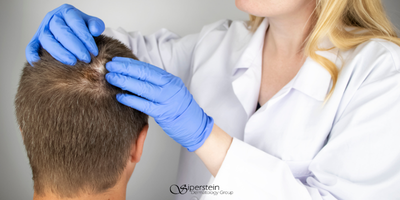
Hair loss can be alarming, especially when it happens suddenly and in noticeable patches. One common cause of this type of hair loss is alopecia areata, an autoimmune condition that affects people of all ages. At Siperstein Dermatology Group, we frequently diagnose and treat alopecia areata, and the good news is that there are effective treatment options available.
What is alopecia areata?
Alopecia areata is a condition where the body’s immune system mistakenly attacks the hair follicles, leading to hair loss. This often appears as round or oval patches of hair loss on the scalp, but it can also affect the eyebrows, eyelashes, beard, or other areas of the body. The hair follicles remain alive, which means regrowth is possible, either on its own or with treatment.
Alopecia areata can affect individuals of all ages, genders, and ethnic backgrounds. It often presents before the age of 30, but it can occur at any time, including in childhood or later in adulthood. Both men and women are affected equally. While anyone can develop alopecia areata, most cases occur in otherwise healthy individuals.
What causes alopecia areata?
Alopecia areata is considered an autoimmune condition, but the exact cause isn’t fully understood. Several factors may contribute, including genetics (it can run in families), immune system dysregulation, emotional or physical stress, and associated autoimmune conditions such as thyroid disease or vitiligo. It is important to note that alopecia areata is not contagious and is not caused by poor hygiene or hair care practices.
What does it look like?
Common signs include smooth, round patches of hair loss, sudden shedding over days to weeks, and short, broken “exclamation point” hairs at the edges of patches. Some patients may also notice nail changes such as pitting or ridging. In more extensive cases, alopecia totalis refers to loss of all scalp hair, and alopecia universalis refers to loss of all body hair.
How is it treated?
Treatment depends on the extent of hair loss, age, and patient preference. While there is no permanent cure, many patients experience significant regrowth.
Corticosteroid injections are often first-line for small patches and are injected directly into affected areas to reduce inflammation and suppress the immune response. Topical treatments, including prescription topical steroids or other immune-modulating medications, may also be used. Newer oral medications known as JAK inhibitors, such as Olumiant (baricitinib) and Litfulo (ritlecitinib), target the immune pathways involved in alopecia areata and are typically used for more extensive disease. Other options include topical minoxidil to support regrowth and light-based therapies in select cases.
What should you expect?
Alopecia areata can be unpredictable. Some patients experience spontaneous regrowth within months, while others may have recurring episodes or longer-term hair loss. Early treatment often improves outcomes, particularly for limited disease.
The bottom line:
Alopecia areata can be distressing, but it is a treatable condition. With the right approach, many patients experience meaningful hair regrowth and improved confidence. At Siperstein Dermatology Group, we provide personalized treatment plans tailored to your specific type and severity of hair loss. If you are experiencing hair loss, we are here to help guide you through your options and support your regrowth journey.
