

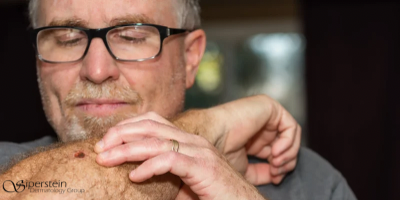
Actinic keratoses (AKs) are common precancerous skin lesions caused by long-term sun exposure. These lesions represent areas of sun-damaged skin that have the potential to develop into squamous cell carcinoma, a type of skin cancer. Because it is not possible to predict which lesions may progress, treatment is recommended.
AKs are most often seen in areas of chronic sun exposure, including the:
-
Face
-
Ears
-
Scalp
-
Chest
-
Arms and hands
Patients often notice lesions that feel rough, scaly, or sandpaper-like. They may appear pink, red, or flesh-colored and are sometimes easier to feel than to see.
Treatment Options
Treatment depends on the number and distribution of lesions and the degree of underlying sun damage.
Liquid Nitrogen (Cryotherapy)
Cryotherapy with liquid nitrogen (LN2) is commonly used to treat individual actinic keratoses.
Liquid nitrogen is applied briefly to freeze the lesion, causing the damaged tissue to peel away as the skin heals.
Advantages:
-
Quick in-office treatment
-
Effective for isolated lesions
-
Minimal preparation required
Expected effects:
-
Redness or blistering
-
Crusting or peeling
-
Healing within approximately 1–2 weeks
Cryotherapy is typically recommended for a small number of visible lesions.
Photodynamic Therapy (Blue Light / PDT)
Photodynamic therapy (PDT) is used to treat multiple actinic keratoses within sun-damaged areas.
A photosensitizing solution is applied to the skin and allowed to incubate before exposure to a blue light source. The activated medication selectively destroys precancerous cells.
Advantages:
-
Treats both visible and subclinical lesions
-
Effective for larger treatment areas
-
Targets areas of diffuse sun damage
Expected effects:
-
Redness and peeling
-
Temporary sun sensitivity
-
Healing typically within 1–2 weeks
Efudex (Cream)
Efudex® (fluorouracil 5%) is a topical chemotherapy medication used for field treatment of actinic keratoses.
It is typically applied for 2–4 weeks depending on the treatment area and physician instructions. The medication works by selectively destroying abnormal sun-damaged cells.
During treatment, patients should expect:
-
Redness
-
Scaling or crusting
-
Tenderness or burning
These reactions are expected and indicate treatment response. Healing generally occurs within several weeks after treatment is completed.
Efudex is particularly useful for areas with extensive sun damage.
Follow-up and Prevention
Patients with actinic keratoses have an increased risk of developing skin cancer and should have regular skin examinations.
Daily sun protection is important to reduce future lesions:
-
Broad-spectrum SPF 30+ sunscreen
-
Protective clothing and hats
-
Avoidance of peak sunexposure
Early evaluation and treatment of actinic keratoses helps reduce the risk of progression to skin cancer.
